Elevate AI HR Dashboard: A Blueprint for Modern Workforce UI
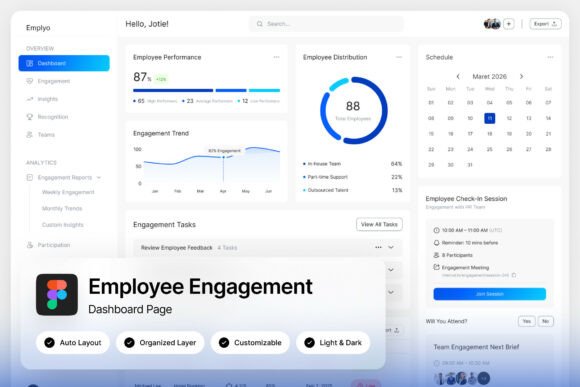
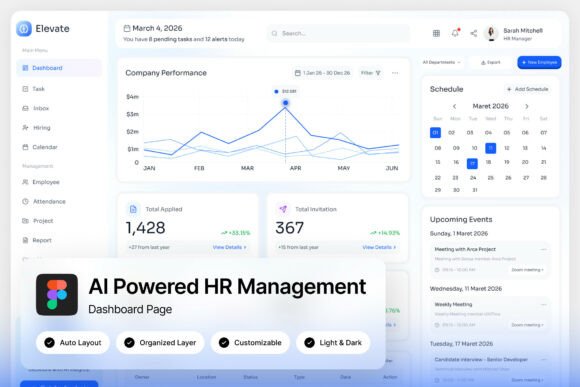
Managing a team requires more than just spreadsheets and email chains; it demands clarity, speed, and foresight. In the crowded landscape of HR technology, the interface through which we view our workforce data is just as critical as the data itself. Enter the Elevate AI HR Dashboard, a crisp, professional interface design that redefines how we approach people operations. It is not merely a collection of charts; it is a visual ecosystem designed for the modern HR tech startup, the enterprise UX designer, and the SaaS team looking to build a robust people operations platform. By combining a clean light theme with strategic blue accents, this dashboard offers a serene yet powerful environment for making smarter workforce decisions.
The Power of a Clean, Professional Interface
Visual noise is the enemy of productivity. When HR managers or C-suite executives log into a system, they need immediate access to actionable insights without the cognitive load of cluttered layouts. The Elevate AI HR Dashboard excels in this regard, utilizing a light theme that promotes readability and reduces eye strain during long work sessions. The use of blue accents is a deliberate psychological choice; blue is widely associated with trust, stability, and intelligence—qualities essential for any HR platform.
However, the visual appeal of a dashboard like Elevate transcends its immediate function. The principles embedded in its design—pixel-perfect layout, well-organized layers, and a balance of data density and whitespace—are fundamental to effective visual communication. Whether you are designing a complex SaaS platform or a simple internal tool, the layout logic found in this dashboard provides a masterclass in hierarchy. The integration of AI-powered insights is visually represented in a way that feels intuitive rather than intrusive, guiding the user's eye to the most critical information first.
Beyond HR: Adapting the Dashboard Aesthetic for Design Projects
While the primary function of this UI kit is workforce management, the design language it employs is incredibly versatile. For brand strategists and graphic designers, the clean geometry and structured grids of the Elevate dashboard offer a fresh aesthetic that can be repurposed for a variety of creative projects.
Consider the current trend toward "data-driven" aesthetics in branding. Companies want to look smart, efficient, and transparent. By adapting the visual elements of a high-end dashboard, you can create marketing assets that resonate with a tech-savvy audience. Here are a few ways to translate this UI style into other domains:
- Editorial Design: Use the chart styles and data visualization techniques from the dashboard to create infographics for blogs and digital magazines. A well-designed graph can turn a dry report into a compelling story.
- Pitch Decks and Presentations: Entrepreneurs can borrow the clean layout and modern typography of the dashboard to build pitch decks that look professional and organized. The "headcount metrics" style can be repurposed for financial projections or user growth charts.
- Social Media Graphics: The "recruitment pipeline" visuals can be stylized into engaging LinkedIn or Instagram posts that highlight company growth or industry trends. The pixel-perfect layout ensures that these graphics look sharp on high-resolution screens.
- Web Design Elements: UX designers building websites for fintech or healthtech startups can use the UI kit components—such as toggle switches, progress bars, and card layouts—to speed up their workflow while maintaining a high-end aesthetic.
Design Systems and Visual Consistency
One of the standout features of the Elevate package is its commitment to visual consistency. In a world where brands exist across multiple touchpoints—from mobile apps to desktop software to print materials—maintaining a unified look is paramount. The dashboard comes with fully customizable layers and organized naming conventions, which is a lifesaver for teams collaborating on large-scale projects.
For small business owners or creative entrepreneurs, this consistency translates directly to brand recognition. When your internal tools, your public-facing website, and your packaging design all share the same design DNA (clean lines, specific color palettes, consistent spacing), you build a subconscious level of trust with your audience.
Furthermore, the inclusion of Free Google Fonts and a dedicated font links file makes implementation seamless. Typography is often the glue that holds a design system together. By utilizing the recommended fonts, you ensure that your typography aligns with the visual weight of the interface, improving readability across all platforms.
Practical Application: From Wireframe to Final Product
Let’s look at how a content creator or marketer might practically apply these assets. Suppose you are launching a new digital product—a course, an ebook, or a software tool. You need a landing page that converts.
Using the Elevate AI HR Dashboard as a foundation, you can structure your landing page using the same logical flow used for HR data. The "Employee Performance Charts" section can be adapted to display "Student Success Rates" or "User Satisfaction Scores." The "Payroll Summaries" layout can be reimagined as "Pricing Tiers" or "Feature Comparisons."
Because the design is fully customizable with easy editing, you aren't locked into the HR theme. You can swap out the icons, change the color palette to match your brand identity, and replace the data sets with your own copy. The result is a professional, high-converting page that looks like it was built by a top-tier agency, but was actually assembled in a fraction of the time.
Technical Specifications That Matter
For the technically minded designer, the specs of this package are worth noting. The 1440×1024 px resolution is an industry standard for desktop web design, ensuring that your mockups look accurate on standard monitors without being overly heavy files. The availability of both Light and Dark mode interfaces is also crucial; dark mode is no longer a novelty but a user expectation. Designing for both ensures your product feels modern and accessible.
The fact that this is a Figma file makes it accessible to the vast majority of the modern design community. Figma’s collaborative nature means that a team can work on customizing these dashboards in real-time, ensuring that the final product is a true reflection of the team's collective vision.
Final Thoughts on Smarter Design Choices
Choosing the right design assets is about more than just aesthetics; it's about efficiency and communication. The Elevate AI HR Dashboard is a prime example of a design asset that offers immediate functional value for HR teams while providing a rich source of inspiration for broader design applications. It proves that data visualization can be beautiful and that professional tools don't have to be ugly or confusing.
Whether you are building the next great SaaS platform, streamlining your company's internal operations, or looking for a clean, structured aesthetic for your next creative project, this UI kit provides the building blocks you need. It bridges the gap between raw data and human understanding, allowing you to present information with the clarity and professionalism it deserves.