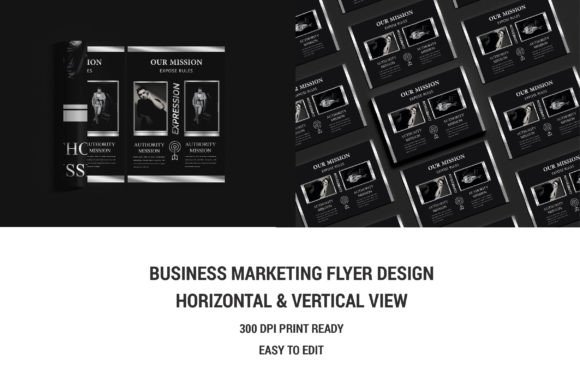
Business Marketing Flyer Design: Templates for Every Campaign
There is a specific kind of frustration that hits when you are staring at a blank screen, trying to drum up a flyer for a flash sale or a new service launch. You know the copy is ready, and the offer is solid, but the visual layout is missing. For small business owners and busy marketing managers, starting from absolute zero is a time sink. That is exactly why having a structured starting point—a professional template system—changes the game. It allows you to focus on the message rather than getting bogged down in pixel-pushing.
When we talk about effective Business Marketing Flyer Design, we are looking for that intersection of speed and quality. It is not just about having a pretty picture; it is about having a functional asset that communicates value immediately. Whether you are promoting a local event, launching a product, or just trying to keep your brand top-of-mind in a neighborhood, the visual hierarchy of your flyer determines if it gets read or gets tossed.
The Power of Dual Perspectives: Vertical and Horizontal Layouts
One of the biggest mistakes in visual communication is ignoring the context of the medium. A design that works beautifully as a vertical poster pinned to a coffee shop bulletin board might look cramped when repurposed for a horizontal website banner. This is where the versatility of a robust design package shines.
By utilizing templates that offer both vertical and horizontal previews, you ensure that your brand identity remains consistent across different touchpoints. Imagine you are running a campaign for a summer festival. You need:
- Vertical Flyers: Perfect for printing on standard letter paper, handing out on the street, or pinning to corkboards. The vertical orientation naturally guides the eye from the headline down to the event details.
- Horizontal Assets: Essential for digital use. Think Facebook cover photos, email headers, or landscape posters. Having a pre-designed horizontal version saves you from awkwardly cropping your vertical design and losing key information.
This adaptability is a hallmark of premium design assets. It ensures that whether your audience sees your marketing on a mobile screen or a physical flyer, the composition feels intentional and balanced.
Technical Specs That Actually Matter to Printers
If you have ever sent a design to a print shop only to have them reject it for low resolution or wrong color modes, you know the pain. A significant part of a professional Business Marketing Flyer Design workflow involves technical compliance. You need files that are ready to go without requiring a degree in pre-press engineering.
A high-quality template package should solve these headaches before they start. Here is what you should be looking for to ensure smooth production:
- 300 DPI Resolution: This is non-negotiable for print. Anything lower looks pixelated and blurry, which instantly cheapens your brand perception. 300 DPI ensures crisp text and sharp images.
- CMYK Color Mode: Monitors use RGB (light), but printers use CMYK (ink). If you design in RGB, the colors will shift—often dramatically—when printed. Professional templates come pre-set in CMYK, so the blue you see on screen is the blue you get on paper.
- Illustrator EPS and JPG Files: Having vector formats (EPS) is crucial. Vectors allow you to scale your flyer up to billboard size without losing quality. The JPGs are great for quick digital previews or web uploads where vector editing isn't possible.
By prioritizing these specifications, you eliminate the back-and-forth with print vendors and ensure your marketing materials look as professional as your business deserves.
Streamlining Your Workflow with Editable Assets
Time is the most expensive resource for any entrepreneur. The beauty of a 100% vector, easy-to-edit template is the sheer amount of time it recovers. Instead of spending four hours aligning text boxes and drawing shapes, you are simply swapping out the placeholder text for your own details and adjusting the colors to match your brand palette.
This efficiency allows for rapid iteration. If you are a social media manager, you can create a week's worth of content variations in an afternoon. If you are a small business owner, you can quickly update a seasonal promotion without hiring a freelancer every single time.
Typography and Readability
Typography is often the unsung hero of design. A flyer can have a great layout, but if the font is illegible or clashes with the brand voice, the message fails. Good templates usually come with suggestions for font pairings or utilize free, widely available fonts that you can easily download and install.
When customizing your flyer, pay close attention to the hierarchy of your text:
- The Hook: This needs to be bold and readable from a distance. It’s the first thing the eye catches.
- The Details: This includes the "when" and "where." It should be smaller but still clean and legible.
- The Call to Action: Whether it’s a QR code, a phone number, or a website URL, this needs to stand out slightly from the background noise.
Using vector files means you can adjust kerning (letter spacing) and leading (line spacing) to perfect the readability, ensuring that even the fine print is easy to scan.
Beyond the Flyer: Maximizing Your Design Investment
A smart designer doesn't just use a template once. The elements within a high-quality Business Marketing Flyer Design—the layout grid, the decorative accents, the photo placement—can be deconstructed and used for other branding efforts. You might take the header section and turn it into an Instagram post, or use the background texture for a desktop wallpaper.
Think of the template as a toolkit. The "100% vector" feature is particularly powerful here. Because every element is scalable, you can take a small graphic from the flyer and blow it up for a window decal or shrink it down for a business card without any loss of resolution.
Furthermore, consistency builds trust. When your flyers, social media graphics, and digital ads all share the same visual DNA—because they were derived from the same source assets—your audience begins to recognize your brand instantly. This visual consistency is what separates amateur marketing from professional brand building.
Ultimately, the goal is to remove barriers between your idea and its execution. With the right technical specifications and an editable, vector-based format, you are equipped to handle whatever marketing challenge comes next, ensuring your business always puts its best visual foot forward.