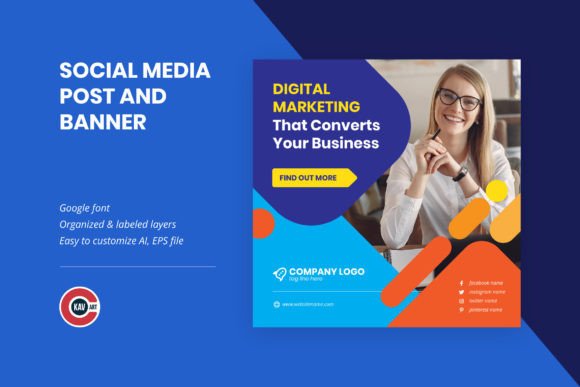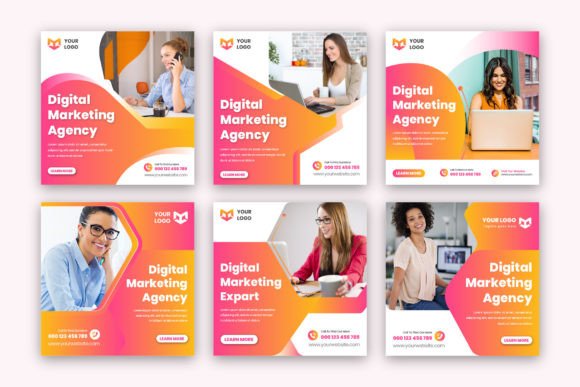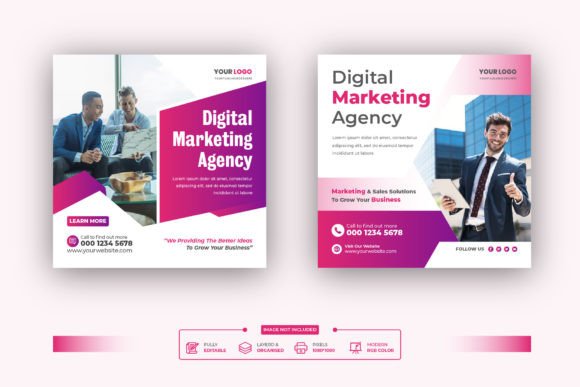
Corporate Digital Marketing Social Media Post: Design Templates for Brand Consistency
Every brand manager and small business owner knows the struggle: you need a consistent, professional presence across all digital platforms, but the time and budget required for custom design work can feel overwhelming. Imagine having a toolkit that streamlines this process, allowing you to create polished, on-brand content in minutes rather than hours. That's the value proposition behind well-crafted design templates, particularly those tailored for the fast-paced world of corporate digital marketing. These assets aren't just about looking good; they're about working smarter, maintaining visual cohesion, and ensuring your message resonates clearly with your audience.
Why a Unified Visual Language Matters More Than Ever
In the crowded digital landscape, your social media feed is often the first impression a potential client or customer has of your brand. Scrolling through a mix of mismatched graphics, inconsistent fonts, and varying color palettes can create confusion and erode trust. A cohesive visual identity, on the other hand, signals professionalism, reliability, and attention to detail. It tells your audience that you take your business seriously. This is where a dedicated Corporate Digital Marketing Social Media Post template becomes an indispensable part of your marketing toolkit. It provides a pre-designed framework that enforces your brand guidelines—the specific hex codes, approved typefaces, and logo placement—ensuring every post, from a product announcement to an industry insight, feels unmistakably yours.
Beyond the Feed: Multipurpose Applications for Maximum ROI
The true power of a versatile design template lies in its adaptability. While its primary function might be for square social media posts (optimized for platforms like Instagram and Facebook), its utility extends far beyond a single use case. Consider these practical applications:
- Internal Communications: Use the same clean, professional template to create engaging announcements for team meetings, celebrate employee milestones, or share company news on internal channels like Slack or Teams.
- Digital Advertising: Adapt the template for paid social ads or Google Display Network banners. A consistent look reinforces brand recognition even in paid placements.
- Email Marketing Headers: Extract key visual elements to design compelling headers for your newsletter, creating a seamless experience from social media to inbox.
- Presentation Slides: Deconstruct the template to create a cohesive slide deck for webinars, client pitches, or investor meetings, using the same color scheme and typography.
- Print Collateral: While designed for digital, the core elements can be reconfigured for print materials like flyers, postcards, or event programs, ensuring your offline presence matches your online one.
This kind of multipurpose functionality turns a single design asset into a comprehensive brand kit, saving you from starting from scratch each time a new visual need arises.
Demystifying the Design: What Makes a Template Effective?
A high-quality template is more than just a pretty layout; it's a thoughtfully constructed system. Look for features that prioritize both aesthetics and practicality. For instance, a template designed in Adobe Illustrator (as opposed to simpler raster-based editors) offers superior scalability and editability. Vector-based files allow you to resize graphics without losing quality, a crucial feature for adapting a 1080x1080 social post into a large-format poster or a small web icon. Furthermore, the inclusion of organized layers, named artboards, and editable text boxes with placeholder copy makes the customization process intuitive, even for those with only basic Illustrator skills. The choice of color mode is also critical: RGB is essential for digital screens, ensuring the colors you choose in the file will render accurately on monitors, tablets, and phones.
Practical Steps to Customize and Implement Your Template
Acquiring the template is just the first step. The real value comes from effectively tailoring it to your specific brand. Here’s a straightforward approach:
- Gather Your Brand Assets: Before you even open the file, have your brand style guide handy. This should include your logo files (preferably in vector format like .AI or .EPS), your primary and secondary color palettes (with exact color codes), and your approved fonts.
- Systematic Editing: Open the template in Illustrator. Use the Layers panel to navigate easily. Start by swapping out the placeholder logo with your own. Then, use the Eyedropper tool to apply your brand colors to designated shape fills or text. Finally, replace the placeholder text with your own messaging, ensuring you maintain the established hierarchy and alignment.
- Test for Readability: Once customized, view the design at 100% zoom. Is the text legible against the background, especially on mobile devices? Check contrast ratios to ensure accessibility. A beautiful design fails if the core message isn't easily readable.
- Create Variations: Use your master template to create a series. Duplicate the artboard and change out the headline, image, or call-to-action. This allows you to build a content calendar visually, planning a week or month of posts that look cohesive yet varied.
Selecting the Right Template for Your Brand's Personality
Not all corporate templates are created equal. The aesthetic should align with your brand's personality. A law firm or financial consultancy might gravitate towards a template featuring a clean, minimalist layout, a serif font for a traditional feel, and a muted, authoritative color palette. In contrast, a tech startup or a creative agency might prefer a template with bold sans-serif typography, dynamic geometric shapes, and a more vibrant color scheme. The key is to choose a design system that feels authentic to your industry and your unique value proposition. It should feel like a natural extension of your brand voice, not a forced, generic container.
Ultimately, investing in a robust, editable template for your Corporate Digital Marketing Social Media Post is an investment in efficiency and brand equity. It empowers you and your team to produce high-quality, consistent content that builds recognition, fosters trust, and engages your audience effectively—all while reclaiming the creative time needed to focus on strategy and growth. In the realm of digital marketing, where visual noise is constant, clarity and consistency are your most powerful tools.