Lacosata: Crafting Presentations That Actually Connect
You know that moment when you're staring at a blank PowerPoint slide, cursor blinking back at you, and you realize you need to present something important tomorrow morning? Maybe it's a client pitch, a quarterly review, or a workshop you're leading. The content is solid in your head, but translating it into slides that look polished and keep people engaged feels like climbing a mountain. This is exactly where a thoughtfully designed template like Lacosata changes the game.
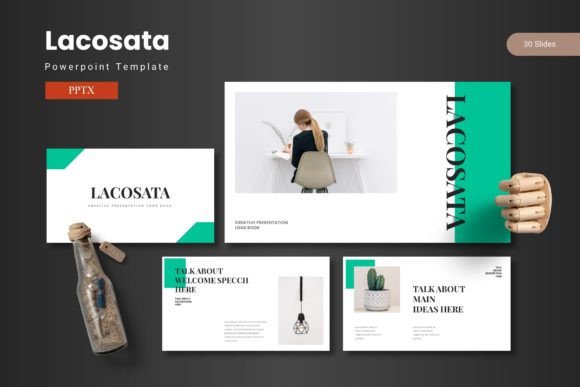
Lacosata - Powerpoint Template isn't just another set of slides with generic placeholders. It's built for people who want their presentations to feel intentional—where every chart, every graphic, and every layout choice serves a purpose. With over 150 total slides spread across five premade color schemes, you're working with a library that adapts to different moods and industries without requiring you to start from scratch or hire a designer for every deck.
Why Visual Cohesion Matters More Than You Think
Here's something many professionals overlook: your audience decides whether to trust you within the first few seconds of a presentation. Clashing fonts, inconsistent spacing, or amateurish graphics send a subtle signal that the work itself might lack rigor. Lacosata addresses this by grounding every slide in master slides—meaning when you adjust a font or shift a color accent, those changes ripple through your entire presentation automatically. You maintain visual consistency without babysitting each individual page.
The five color variations included aren't random palettes either. Each one carries a distinct personality. There's a scheme that feels corporate and trustworthy for boardroom settings, another that leans warm and approachable for community workshops, and others that strike balances between bold energy and understated elegance. Switching between them takes seconds, letting you test which direction resonates best with your specific audience before committing.
Infographics That Actually Tell a Story
Anyone who has tried building an infographic from scratch in PowerPoint knows the pain. Aligning shapes, matching colors, getting text to sit right inside oddly proportioned boxes—it eats hours. Lacosata ships with handcrafted infographics that solve this problem elegantly. These aren't clip-art throwaways. They're designed to communicate complex data relationships, process flows, timelines, and comparisons in ways that feel intuitive at a glance.
Every graphic element is fully resizable and editable, which means you can stretch a comparison chart to emphasize differences or shrink a timeline to fit a tighter layout. The pixel-perfect illustrations maintain their clarity whether you're projecting on a conference room screen or sharing a PDF version digitally. Picture placeholders use drag-and-drop functionality, so swapping in your own product photos, team headshots, or branded imagery takes nothing more than a click and a drag.
Practical Applications Beyond the Boardroom
Think about the range of scenarios where strong visual communication matters. A small business owner preparing a pitch for local investors needs slides that convey credibility without feeling sterile. A content creator designing a workshop curriculum wants layouts that balance text-heavy explanations with engaging visual breaks. A marketer assembling a campaign recap for stakeholders needs data visualizations that make numbers feel meaningful rather than overwhelming.
Lacosata supports all of these situations and more. The gallery and portfolio slides work beautifully for creative professionals—photographers, designers, architects—who need to showcase work within a structured presentation format. Section break slides provide natural breathing room between topics, helping audiences mentally reset before diving into the next idea. If you're building a brand identity deck, the template's clean typography and balanced compositions let your brand voice come through without the template itself competing for attention.
Working Smarter with Master Slides
One feature worth emphasizing: the master slide architecture. For anyone unfamiliar, master slides function like a control center for your entire presentation. Instead of adjusting the font size on slide 47 individually, you modify the master once and every corresponding element updates throughout. This matters enormously when you're working under time pressure or collaborating with a team where multiple people might touch the same file.
Lacosata's master slide system also means you can develop a reusable template for your organization. Set your brand colors, lock in your preferred font pairings, establish consistent heading hierarchies—and then hand the template off to colleagues who can populate it with their own content while maintaining the visual standards you've set. It's a practical approach to brand consistency that doesn't require every team member to be a design expert.
Choosing Colors That Support Your Message
Color psychology isn't just marketing theory—it's something audiences respond to instinctively. The five color schemes bundled with Lacosata give you a starting point, but understanding why certain palettes work in certain contexts helps you make smarter choices. Cooler tones like deep blues and slate grays tend to project authority and stability, making them well-suited for financial presentations or technology pitches. Warmer palettes with terracotta, soft gold, or muted greens create a sense of approachability that works for lifestyle brands, wellness topics, or community initiatives.
The template's structure encourages you to experiment. Because switching color schemes is straightforward, you can build your content once and then audition different visual directions. This kind of flexibility is particularly valuable during client work, where presenting two or three visual treatments gives stakeholders meaningful options rather than forcing them to imagine alternatives from a single static mockup.
Pairing Typography with Purpose
Typography choices inside a presentation carry weight. A heavy sans-serif headline communicates confidence and modernity. A refined serif suggests tradition and authority. Script or handwritten accents add personality but need careful placement to avoid sacrificing readability. Lacosata's typography framework is designed to balance these considerations—headlines command attention without overwhelming, body text maintains clarity at various screen sizes, and accent text adds visual interest where appropriate.
When you're customizing, pay attention to contrast between heading and body fonts. Pairing a bold geometric sans-serif with a lighter, more neutral body font creates natural hierarchy that guides the eye. Avoid using more than two or three font families in a single presentation, as visual clutter undermines the professionalism you're trying to project. The template's readme file includes font and photo information, which helps you source the right typefaces if you want to match the original design intent precisely.
Getting the Most from Your Investment
The five PPTX files included—each representing a distinct color scheme with 30 slides—mean you're getting a versatile toolkit rather than a one-note template. Whether you're building a sales deck, an educational lecture, a portfolio showcase, or an internal strategy document, the variety of slide types ensures you'll find layouts that fit your content rather than forcing your content into ill-fitting frames.
Before your next presentation, consider setting aside thirty minutes to explore what's available. Import your content into a few different slide layouts. Test how your images look inside the picture placeholders. Try switching color schemes to see which one aligns with your brand or the mood you want to set. That small investment of time pays dividends when you're standing in front of an audience and every slide feels like it was designed specifically for your message.
The real value of a tool like Lacosata isn't just that it makes slides look better—it's that it removes the friction between having something important to say and presenting it in a way that people actually want to watch. When design decisions are handled, your energy shifts to delivery, storytelling, and connection. That's where presentations succeed or fail, and that's where your focus should be.